.webp)

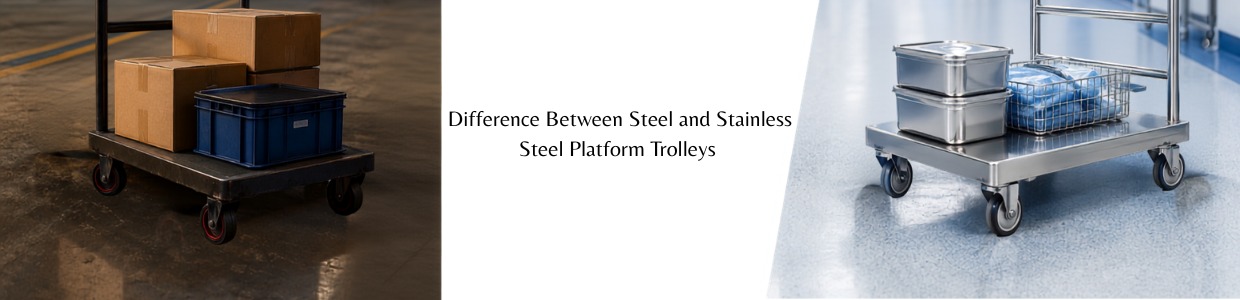
Choosing the right platform trolley involves more than comparing dimensions and load capacities. The material used for the frame and platform influences corrosion resistance, maintenance requirements, appearance, cleaning, operating life and suitability for specific working environments. Therefore, buyers should understand the practical difference between steel vs stainless steel platform trolleys before placing an order.
Both materials can produce dependable Industrial Platform Trolleys when the structure, welding, platform thickness, load distribution and castor assembly are engineered correctly. The better choice depends on where the trolley will operate, what it will transport, how frequently it will move and whether it will face moisture, chemicals or strict hygiene requirements.
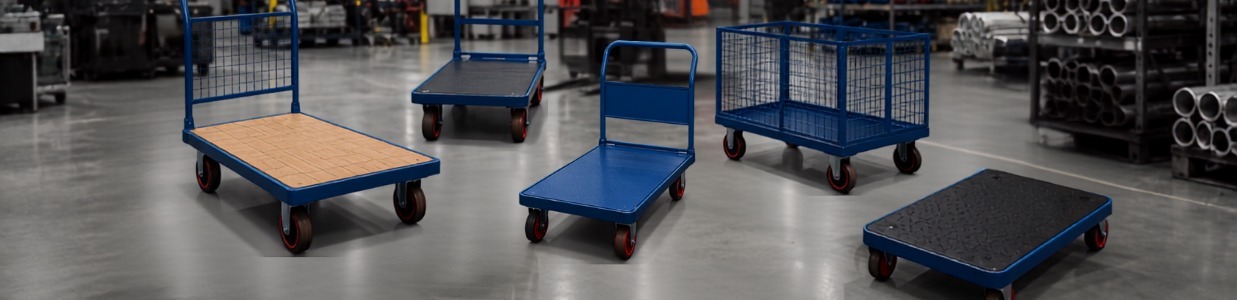
Rexello’s Platform Trolleys are used across manufacturing facilities, warehouses, logistics operations, hospitals, retail distribution centres and other industrial environments. These applications require different combinations of load capacity, platform dimensions, wheel materials and structural reinforcement.
Material DNA: What Really Separates Steel From Stainless Steel?
In this comparison, the term steel platform trolley generally refers to a trolley manufactured using conventional mild or carbon steel. This material is widely used for industrial frames because it can be formed, welded and reinforced into robust structures. It is suitable for warehouses, factories and indoor material movement where the operating environment is reasonably dry and controlled.
A stainless steel platform trolley is manufactured using a steel alloy containing chromium. Stainless steel generally contains at least approximately 10.5% chromium, which enables a thin passive film to form on its surface. This protective film gives stainless steel its characteristic resistance to staining and corrosion.
The distinction is therefore not simply about appearance. Conventional steel usually relies more heavily on an applied protective finish, while stainless steel receives much of its corrosion resistance from its alloy composition and passive surface layer. Buyers looking for Material Handling Equipment should match these material characteristics to the actual operating environment.
Strength Beyond the Surface: Which Trolley Carries More?
 It is inaccurate to assume that every steel trolley is automatically stronger than every stainless steel trolley, or vice versa. Load capacity depends on the selected material grade, sheet thickness, tube dimensions, frame construction, welding quality, platform reinforcement and overall trolley geometry. A well-engineered trolley distributes weight across the complete frame rather than concentrating pressure at weak points.
The castor assembly is equally important. Even a strong platform can perform poorly when fitted with undersized wheels, weak mounting plates or unsuitable bearings. Rexello explains that the trolley frame, platform strength and wheel performance must work together to provide dependable material handling under repeated movement, turns and changing load conditions.
Businesses moving machinery, industrial components or bulk materials should request a proper Load Capacity Assessment instead of selecting a trolley only by its appearance. A specialist Platform Trolley Manufacturer can recommend the appropriate frame construction, deck size and Heavy-Duty Castor Wheels for both static and dynamic loading conditions.
The Rust Test: Performance Around Water and Moisture
Conventional steel performs effectively in dry warehouses, production floors and indoor storage areas when its protective finish remains intact. However, exposure to moisture and oxygen can initiate corrosion when the underlying steel becomes exposed. Structural steel corrosion is an electrochemical process involving water and oxygen, with the iron eventually oxidising to form rust.
Stainless steel provides a stronger defence in wet, humid or frequently cleaned environments because of its chromium-rich passive layer. If this layer is locally disturbed, it can reform under suitable oxidising conditions. This makes Stainless Steel Platform Trolleys attractive for applications where regular contact with water or environmental moisture cannot be avoided.
However, stainless steel should not be described as completely rustproof. Its performance depends on the selected grade, fabrication quality, surface condition, cleaning routine and surrounding chemicals. Salt, aggressive substances and contamination can still cause staining or corrosion when the wrong stainless steel grade is selected.
Clean Movement: Hygiene and Maintenance Compared
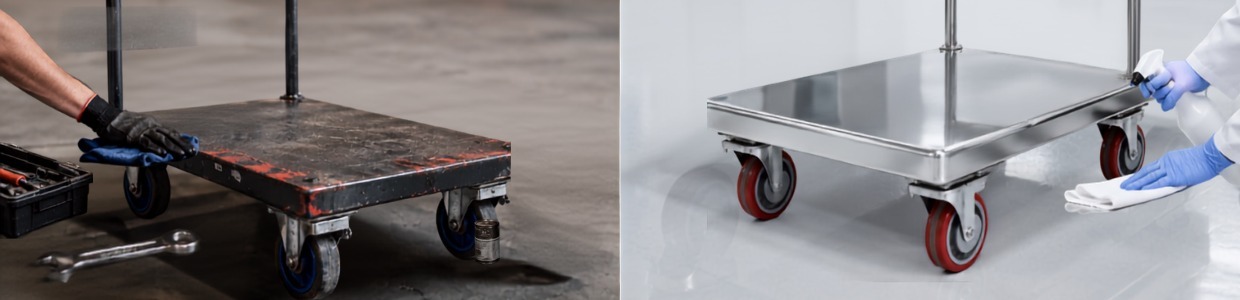
Factories and general warehouses may primarily prioritise strength, load movement and cost. In these locations, Steel Platform Trolleys can offer a practical solution when the trolley is kept dry, inspected regularly and protected from severe surface damage. Routine maintenance should include checking the frame, handle, welds, fasteners and coating condition.
Hospitals, pharmaceutical facilities, food-processing units, commercial kitchens and clean operating areas often have stricter cleaning requirements. Stainless steel is widely used in food-contact and processing applications because of its hygienic surface characteristics. A suitably finished Stainless Steel Trolley can support frequent cleaning without depending on a painted surface for its primary corrosion protection.
Cleaning requirements should still be discussed with the manufacturer before purchase. Trolley design should minimise areas where moisture, dirt or residue can accumulate. Professional Custom Trolley Manufacturing can provide smoother surfaces, appropriate joints, drainage-conscious construction and application-specific dimensions for environments where cleanliness is essential.
Industrial Toughness or Refined Finish: Appearance Matters Too
A conventional steel platform trolley usually has a functional industrial appearance. Its protective surface finish can be selected to suit the facility, branding requirements or visibility standards. This makes steel a flexible option for manufacturing plants, engineering units, warehouses and logistics centres where practical performance takes priority over presentation.
A stainless steel platform trolley offers a cleaner and more refined metallic appearance. It is often preferred in hospitals, hotels, airports, laboratories, food facilities and customer-facing commercial spaces where equipment must complement a controlled or professional environment. The surface also avoids the visual problem of chipped paint when the correct grade and finish are maintained properly.
Appearance should never replace technical assessment. A polished trolley may still be unsuitable if its wheel material, frame design or load rating does not match the application. Buyers should evaluate aesthetics alongside structural design, floor conditions, turning space, cleaning frequency and the selected Industrial Trolley Wheels.
Purchase Price vs Lifetime Value: Which Costs Less?
A conventional steel trolley will often have a lower initial acquisition cost than a comparable stainless steel model. This can make it an economical choice for dry indoor operations, limited budgets and applications where exposure to corrosive conditions is minimal. Its long-term value will depend on how well the surface protection is maintained.
Stainless steel generally involves a higher upfront material cost, but the initial quotation does not show the complete financial picture. Lifecycle costing should also consider maintenance, downtime, repairs, replacement, operation and residual value. World Stainless notes that stainless steel can sometimes deliver a lower whole-life cost even when its purchase price is higher.
The better investment therefore depends on the environment and expected service life. Purchasing stainless steel for a dry, light-use storeroom may be unnecessary, while repeatedly repairing a conventional steel trolley in a wet facility may become expensive. Reliable Technical Advice helps buyers calculate value based on usage instead of choosing only the lowest quotation.
Wheels Decide the Experience: Mobility Below the Platform
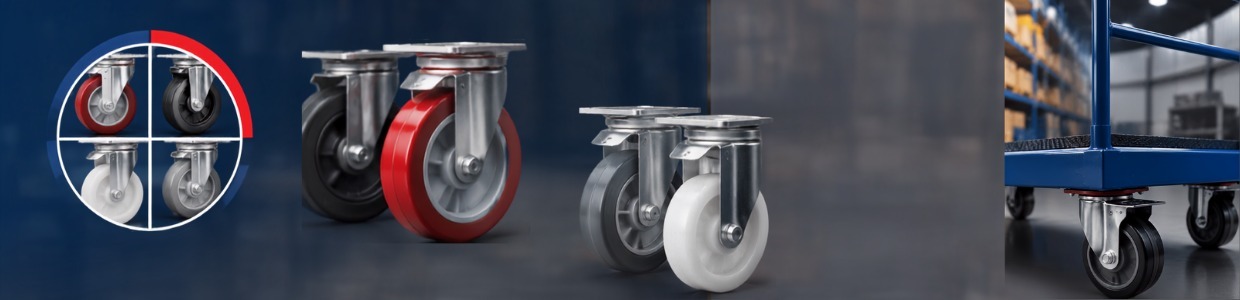
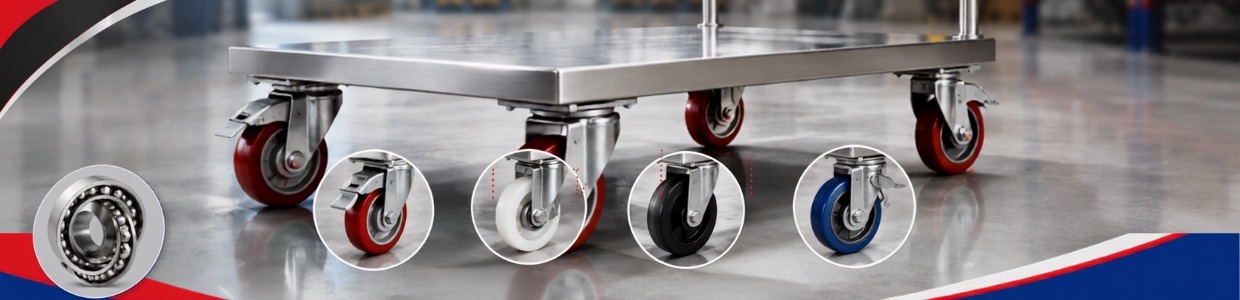
The frame material receives most of the attention, but castor selection determines how the trolley feels during actual movement. Wheel diameter, tread material, bearing type, mounting arrangement and swivel design influence starting effort, steering control, rolling noise, vibration and floor protection. The correct wheel must support the load while remaining suitable for the operating surface.
Depending on the application, a trolley may use Polyurethane Wheels, Nylon Wheels, Rubber Wheels, cast-iron wheels or other specialised materials. Smooth indoor floors may require a different wheel configuration from damaged concrete, tiled corridors, outdoor pathways or chemically exposed areas. The wheel and castor housing should therefore be selected as one engineered system.
Corrosive environments may require Stainless Steel Castors in addition to a stainless steel platform. Rexello lists SS304 stainless steel castor options within its heavy-duty castor range, enabling buyers to align the mobility assembly with the environmental requirements of the trolley.
The Final Choice: Match the Trolley to the Workplace
Choose a steel platform trolley for general industrial use when the environment is mainly dry, the trolley will not face aggressive cleaning chemicals and acquisition cost is an important consideration. Steel can be highly effective for transporting cartons, components, tools, packaged goods and production materials across factories and warehouses.
Choose a stainless steel platform trolley when corrosion resistance, frequent cleaning, hygiene or professional presentation carries greater importance. It may be more suitable for healthcare, pharmaceuticals, food processing, hospitality, laboratories, cold storage and other moisture-prone or controlled environments. The correct stainless grade should always be confirmed according to the actual exposure conditions.
Standard specifications are not always sufficient for complex operations. Rexello provides Custom Platform Trolley Manufacturing with options such as tailored deck sizes, higher load capacities, specialised wheel materials, braking systems and structural reinforcement. This allows each trolley to fit the workflow, available space and operating conditions more precisely.
Move Smarter With Rexello Platform Trolleys
Move materials with a trolley engineered for your actual load, floor, environment and duty cycle. Rexello delivers Steel Platform Trolleys, Stainless Steel Platform Trolleys, Heavy-Duty Castor Wheels, Custom Trolley Manufacturing and application-focused Material Handling Solutions for warehouses, factories, hospitals, food facilities and commercial operations. Speak with our team for product selection, technical guidance and customised configurations that improve mobility, safety and long-term value. 📞 Call: +91 7900147477 | 📧 Email: info@rexello.com | 🌐 Website: https://rexello.com
Frequently Asked Questions
Q1. What is the primary difference between steel and stainless steel platform trolleys?
A1. A steel trolley generally depends on an external protective finish, while stainless steel contains chromium that provides greater inherent resistance to corrosion.
Q2. Are stainless steel platform trolleys stronger than steel trolleys?
A2. Not necessarily. Strength depends on material grade, thickness, frame design, welding, reinforcement and load distribution rather than the material name alone.
Q3. Which platform trolley is suitable for food and pharmaceutical facilities?
A3. Stainless Steel Platform Trolleys are generally preferred where frequent cleaning, moisture resistance and hygienic surfaces are important.
Q4. Can Rexello manufacture customised industrial platform trolleys?
A4. Yes. Rexello provides Custom Trolley Manufacturing based on required dimensions, load capacities, wheel materials, braking systems and operating conditions.