.webp)

Castor wheels may look like simple components, but they play a critical role in how efficiently materials, equipment, and machinery move across industrial environments. From warehouses and manufacturing plants to hospitals and logistics facilities, choosing the right industrial castor wheels can improve mobility, reduce manual effort, protect flooring, and enhance workplace safety.
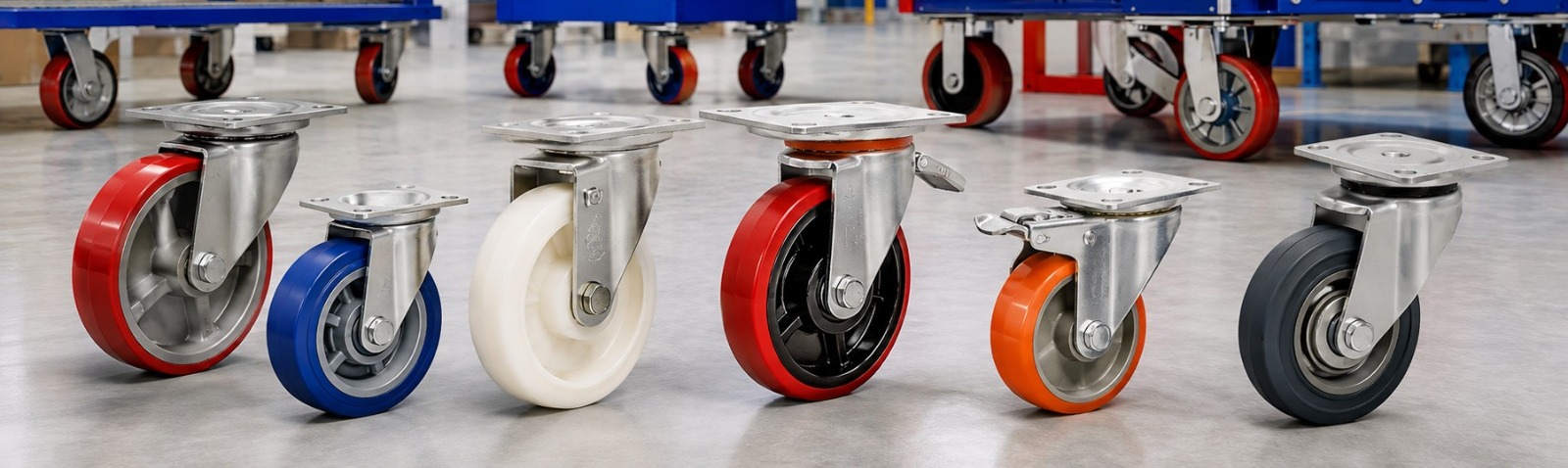
Different industries require different wheel materials, load capacities, mounting styles, and movement mechanisms. Understanding these variations helps businesses select the right castor wheels for industrial applications while improving equipment performance and reducing maintenance costs.
Heavy-Duty Castor Wheels: Built to Carry the Big Loads
Industrial environments frequently involve moving machinery, raw materials, tools, and equipment weighing hundreds or even thousands of kilograms. Heavy duty castor wheels are specifically designed for these demanding applications. Their reinforced construction and high load-bearing capacity make them suitable for manufacturing plants, warehouses, engineering facilities, and material-handling operations.
A reliable heavy duty castor wheel manufacturer focuses on factors such as wheel diameter, mounting strength, bearing quality, tread material, and overall load capacity. These characteristics determine how effectively the wheel performs under continuous industrial use. Choosing high-quality industrial heavy duty castor wheels can also reduce rolling resistance and make heavy equipment easier to manoeuvre.
Businesses using material handling equipment should carefully calculate the total equipment weight before selecting castors. Properly rated wheels reduce premature wear, improve stability, and contribute to safer material movement. For industries regularly transporting substantial loads, investing in heavy duty castors can provide better long-term performance and operational reliability.
PU Castor Wheels: Where Strength Meets Smooth Movement
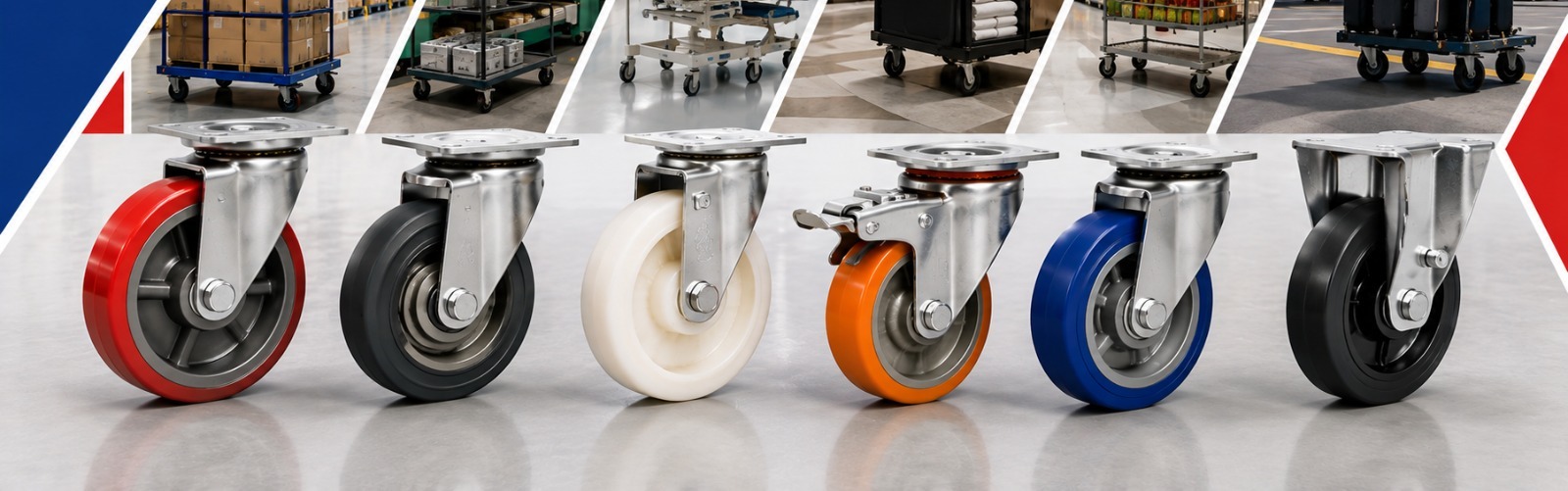
Polyurethane castor wheels are widely used in industrial environments because they provide an effective combination of strength, durability, and floor protection. The polyurethane tread offers good resistance to wear while providing smoother and quieter movement compared with harder wheel materials. This makes PU castor wheels suitable for warehouses, factories, workshops, and indoor material-handling operations.
Another advantage of polyurethane wheels for industrial use is their ability to handle substantial loads without creating excessive noise or damaging flooring. Depending on their construction and load rating, they can be used with platform trolleys, industrial carts, racks, and various types of movable equipment. Their resistance to abrasion also makes them useful in environments where equipment is moved frequently.
When selecting industrial PU castor wheels, businesses should consider floor conditions, operating temperature, load requirements, wheel diameter, and exposure to oils or chemicals. Choosing the appropriate specification can extend wheel life and improve equipment mobility. For businesses looking for a balance between durability and smooth operation, polyurethane remains one of the most versatile castor wheel materials.
Rubber Castor Wheels: Quiet Mobility for Everyday Operations
When noise reduction and floor protection are priorities, rubber castor wheels can be an effective solution. Rubber absorbs vibration and provides relatively quiet movement, making these wheels suitable for hospitals, hotels, offices, commercial facilities, light warehouses, and other environments where equipment needs to move smoothly without excessive noise.
The cushioning properties of rubber wheels can also help reduce vibration transferred to the equipment being transported. This can be particularly useful when moving delicate products, medical equipment, instruments, or lightweight materials. Their grip on many indoor surfaces provides additional control during routine movement.
However, rubber wheels are not always designed for extremely high-load or harsh industrial applications. Businesses should compare load capacity and environmental conditions before making a selection. When used for appropriate applications, quality rubber castors offer comfortable movement, reduced noise, and reliable performance for light-duty material handling equipment.
Nylon Castor Wheels: Tough Performance for Demanding Floors
Nylon castor wheels are known for their strength, low rolling resistance, and resistance to many oils, greases, and chemicals. These characteristics make them useful in factories, warehouses, workshops, food-processing environments, and manufacturing facilities. Their hard wheel surface allows equipment to roll efficiently on smooth industrial floors.
Because nylon does not compress as easily as softer wheel materials, industrial nylon castor wheels can support substantial loads depending on their design and specification. They are commonly installed on industrial trolleys, storage racks, bins, equipment stands, and other material-handling systems. Their durability can make them a practical choice for businesses requiring frequent movement of industrial equipment.
Floor condition should still be considered before choosing nylon. Hard wheels can transmit more vibration and noise on rough or uneven surfaces compared with rubber or polyurethane alternatives. For smooth floors and environments requiring chemical resistance, however, nylon wheels for industrial applications can deliver excellent durability and efficient movement.
Swivel vs Fixed Castors: Choosing the Right Direction
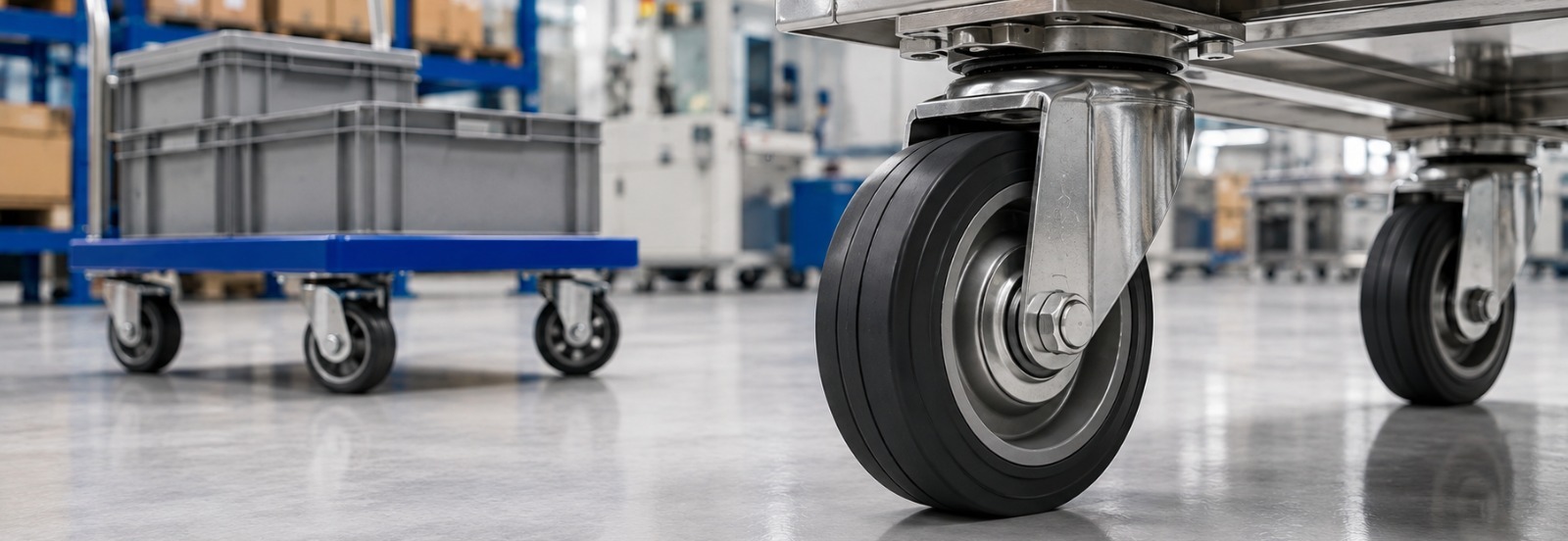
The movement mechanism is just as important as wheel material. Swivel castor wheels rotate around a vertical axis, allowing equipment to change direction and manoeuvre through tight spaces. They are widely used on carts, racks, hospital equipment, and material handling trolleys where flexible multidirectional movement is essential.
Fixed castor wheels, also called rigid castors, move primarily forward and backward. Their controlled movement makes them useful for equipment that needs to travel along predictable paths, particularly when carrying heavier loads. Many industrial trolley designs combine two fixed castors with two swivel castors to achieve a balance between directional stability and manoeuvrability.
Choosing between swivel and fixed castor wheels depends on equipment size, load, travel distance, available turning space, and operator requirements. For additional safety, businesses can also consider castor wheels with brakes to keep equipment stationary during loading, unloading, or storage. The right configuration can significantly improve handling efficiency and workplace safety.
The Right Castor for the Right Industry: Small Wheel, Big Impact
There is no single castor wheel suitable for every application. Warehouses may require heavy duty castor wheels for loaded trolleys, while hospitals may prioritise quiet and smooth movement. Manufacturing plants may need industrial castor wheels that withstand high loads, chemicals, or continuous movement. Matching the castor specification to its working environment is therefore essential.
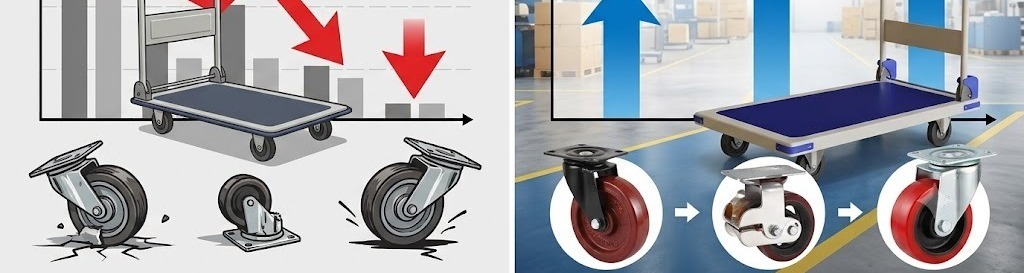
Load capacity, floor type, wheel material, diameter, mounting type, speed, temperature, and operating conditions should all be evaluated before purchasing. Businesses looking for castor wheel solutions should avoid selecting products based only on price. An unsuitable wheel can wear faster, increase pushing effort, damage floors, and affect the overall performance of material handling equipment.
Working with an experienced castor wheel manufacturer or industrial castor wheel supplier can help businesses identify suitable options for their specific requirements. Whether the application involves platform trolleys, manufacturing machinery, warehouse carts, storage equipment, or specialised mobility systems, choosing the right castor can improve productivity, safety, and equipment life.
Ready to Choose the Right Castor Wheel Solution?
Choosing the right industrial castor wheels, heavy duty castor wheels, or material handling solutions can make everyday operations safer, smoother, and more efficient. Get professional assistance in identifying solutions suited to your industrial requirements and operating environment. Whether you need guidance for equipment movement or specialised applications, connect with us today to discuss your requirements.
📞 Call: +91 7900147477 | 📧 Email: info@rexello.com | 🌐 Website: https://rexello.com/
FAQ’s:-
Q1. What are the most common types of castor wheels used in industries?
A1. Common options include polyurethane castor wheels, rubber castor wheels, nylon castor wheels, heavy duty castors, swivel castors, and fixed castors.
Q2. How do I select the correct castor wheel load capacity?
A2. Calculate the total loaded weight of the equipment and select industrial castor wheels with an appropriate safety margin and individual wheel load rating.
Q3. Which castor wheels are suitable for heavy industrial equipment?
A3. Properly rated heavy duty castor wheels are generally suitable for machinery, industrial trolleys, warehouse equipment, and other high-load applications.
Q4. What is the difference between swivel and fixed castor wheels?
A4. Swivel castor wheels allow multidirectional movement, while fixed castor wheels provide controlled forward-and-backward movement.